
Northville Township City Directory Holdings
Think of the surviving Northville directory shelf as history, not a current Township roll. Mill Race Village holds several local runs. The Northville District Library and state library resources round things out. They add newspapers, indexes, yearbooks, and statewide directory guides. One caution matters here. Old entries rarely distinguish "Northville" from "Northville Township." Check the street, the parcel jurisdiction, and the date before assigning a household to the Township rather than the autonomous City of Northville or a nearby postal area.
| Collection | Years | Where held | Access |
|---|---|---|---|
| Northville directories at Mill Race | 1895; 1927-35; 1946; 1956; 1958; 1960; 1968; 1970; 1975-79; 2006-09 | Mill Race Village archives | Appointment appreciated; self-research and assisted-research options |
| Polk and Bresser directory leads | Local exact run not confirmed online | Library of Michigan, local library, or historical collections | Check volume, publisher, and jurisdiction in person |
| Northville Record and its index | Archive from 1869; index 1869-1924 | Northville District Library and Northville History | Digitized issues and name or subject research |
| Palladium yearbooks and oral histories | Yearbooks from 1921 forward; more than 100 interviews | Library Local History Room | Collection access varies by resource |
The directory years are patchy, with no steady annual sequence behind them. No scanned volume labeled specifically for Northville Township appears in the official online collections, so a street directory search may mean turning to printed shelves or adjacent communities' city directory holdings.
Mill Race City Directory Years
Mill Race Village archives anchors the local directory collection. The volumes start with 1895. Publication then picks up again for 1927 through 1935, followed by selected years reaching 2009. Gaps in that run deserve caution. A name that drops out between two volumes might mean the holdings are incomplete. The spelling may have shifted. The format of the directory may have changed. Or the household simply moved within the area. Treat a missing entry as a lead, not a verdict on where someone lived.
Beyond the city directories themselves, the archive keeps surname files. It also holds Northville home and address files, maps, cemetery records, clippings, family papers, business files, school and census material, and oral histories. Those companion records can date a house or household in new ways. A single directory page cannot do that. The historical society is not, however, a custodian of current residency records. Visiting rules are simple: sign in at the desk and use pencils only. A self-research visit costs $10 for nonmembers, while members research free. Assisted research runs $24 per hour. Fees, access conditions, and the full holdings list appear on the archive holdings page.
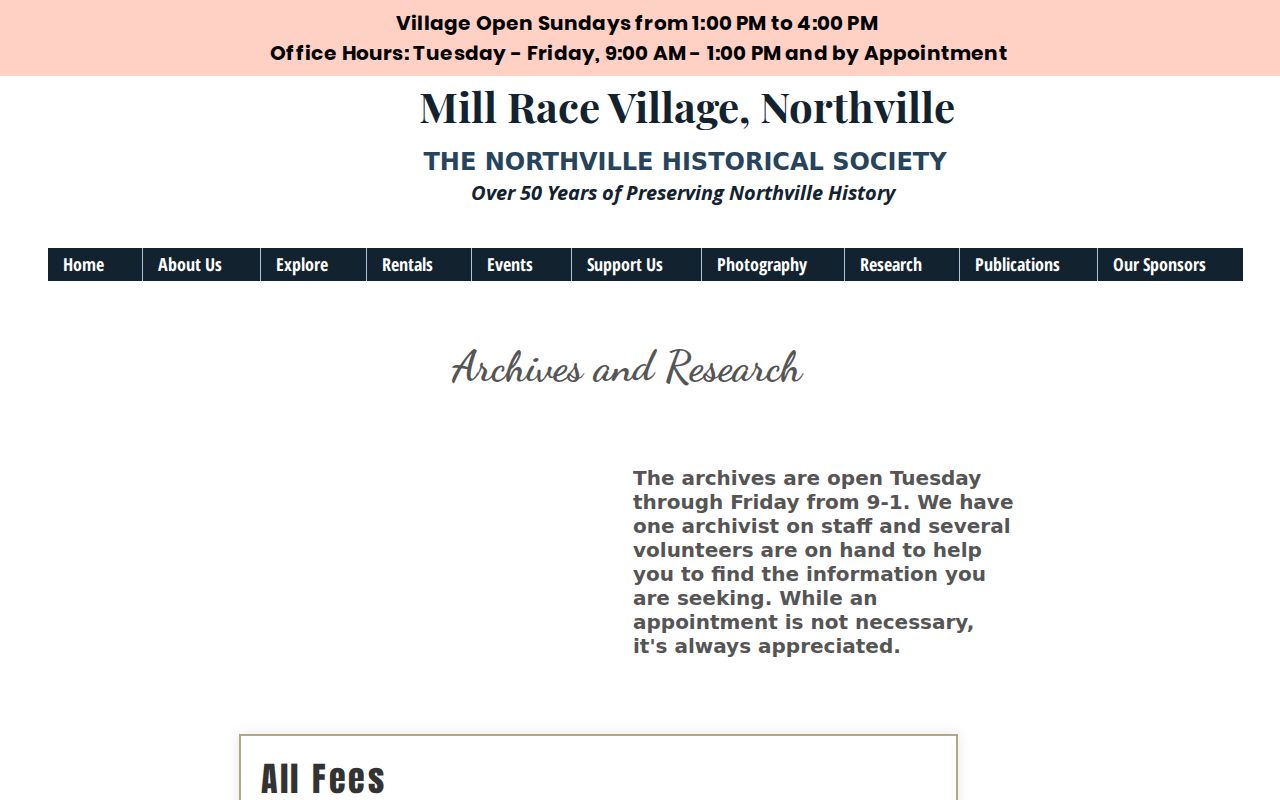
The archive display shows why a physical visit still matters for a residents directory year that was never digitized, or a house file that needs staff help. Some records simply live on paper. A street directory entry read in person can settle what a name index cannot.
Note: Record the volume year, publisher, page, section, and any abbreviation key before comparing the result with another source.
Northville Township Directory Library Access
The Northville District Library's Local History Room sits down on the lower level. It holds the deepest residents directory material for the township. The collection spans Northville-focused books, donated Northville Genealogical Society files, documents, newspaper resources, and reference works. Reference books stay in the building. Copies run 10 cents per page. The local databases mix open online material with access-controlled services. Confirm the access mode before any visit or remote search.
The library database inventory names the strongest assets for a historical street directory hunt. The Northville Record archive sits there, along with the 1869-1924 Northville Record Index. A master index ties together more than 90 or 100 printed local sources. Palladium yearbooks and Voices of Northville interviews round out the holdings. Ancestry Library Edition works onsite only. MyHeritage opens remotely with a library card. The list also carries HeritageQuest, Newspapers.com Library Edition, Detroit newspaper archives, Fold3, and Digital Sanborn Maps of Michigan. The Local History databases listing spells out each collection name. It also notes how it can be reached.
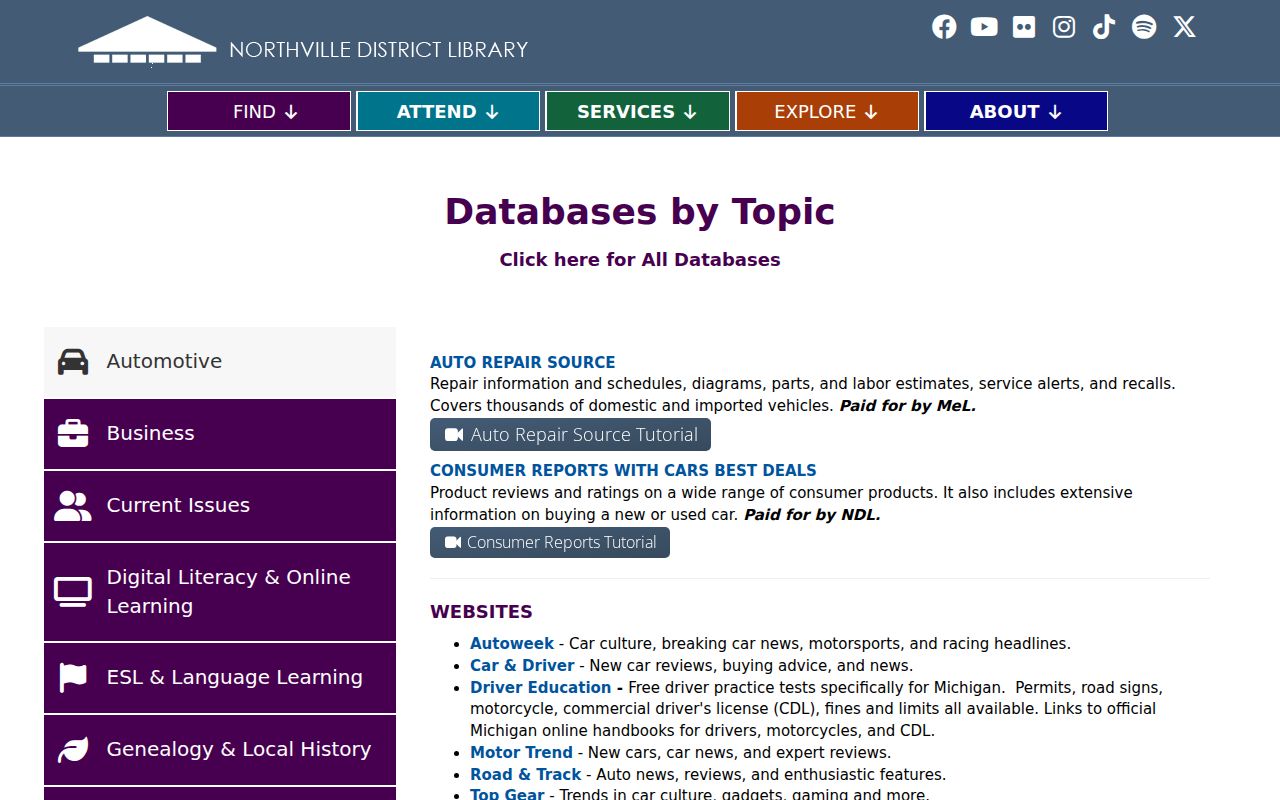
Once a dated name or address surfaces in a Northville Township directory entry, that database list points straight to companion sources. Pick the era first, then the matching archive.
Reading Northville Township City Directory Entries
Treat every historical Northville Township directory entry as a dated publication record rather than a claim about who lives at an address today. The abbreviations changed from volume to volume. Exact punctuation must be checked in the specific book. For the common patterns, the Library of Michigan directory guide lays out what Polk and related directories typically include. Fields cover surname, given name or initials, street address, telephone, and occupation. Family notations appear too, and some entries carry a historical ownership-status field.
| Name form | Surname plus given name or initials; compare variants and former names. |
|---|---|
| Family notation | A spouse in parentheses or a widow notation can distinguish similar names. |
| Address | House number and street are location clues that should be checked against the year and jurisdiction. |
| Occupation | This field describes the printed historical entry, not a current role. |
| Historical status mark | Some publishers used marks related to occupancy or ownership; verify that volume's key before interpreting one. |
Photograph or transcribe a key before trusting any shortened label. Publisher practices varied, so no single abbreviation carries one fixed meaning across every Northville volume.
- Criss-cross directory
- A reverse arrangement that starts with an address or phone and may identify a listed household head.
- Householder index
- A name-centered section used to find the address attached to a household in that edition.
- Abbreviation key
- The volume's explanation of its shortened labels and marks; it should be checked before a field is quoted.
Northville Township Polk and Bresser Methods
Who printed a Northville Township directory shapes how you search it. Polk volumes, the most familiar line, arrange listings several ways at once. You can hunt by surname, by street, by telephone number, or through classified business pages. Bresser took a different path. Its criss-cross volumes, strongest from the late 1960s onward, work from an address to the listed household. That suits a street-by-street sweep. Michigan also had other publishers worth remembering, among them Robinson, Norton, Johnson, W. C. Bailey, and Luedder, each named in the state guide. Note the imprint on every entry you copy. Format and coverage shift from one publisher to the next.
When a family name is what you have, begin in the name section. Then carry the same address into a criss-cross volume or a neighboring year. Try abbreviations and initials as alternate spellings. A directory label settles an ownership question poorly. Trace any historical listing back to a dated deed or parcel record before treating it as proof. Once the historical work is done, the Northville Township street directory route handles modern address-keyed lookups.
Northville Township Directory Newspaper Clues
Digitized issues of the Northville Record sit in the Northville History archive. They are ready to browse. The library's index covers names and subjects from 1869 through 1924. A dated newspaper item can sit beside a dated directory entry and enrich it. You might find an obituary, a school activity, or a civic appointment. Business notices and street references turn up too. Record the issue date and keep the article's context intact. Remember that a newspaper mention proves an event happened. It does not prove continuous residence.
Other sources round out the picture. Yearbooks, cemetery records, and the Voices of Northville interviews each add something. Each carries a different kind of context. The library describes more than 100 long-time resident interviews. Mill Race holds cemetery material along with oral histories. These help when you are tracing a former classmate. They also help with a deceased relative, or the story of a house. Memory and an old listing still need corroboration whenever a precise date or municipality matters.
Tracing Northville Township City Directory Families
Treat each directory result as a small, dated record. For family history work, capture the printed name form. Note the address and any spouse or widow notation. Add the work listing, publisher, year, and page. Then search the same surname in the next available volume. Try the street in a criss-cross section when one exists. Gaps between volumes should stay visible in your notes. Don't fill them with an assumed move or death.
- Find the earliest available entry for the surname and record the volume details.
- Check the next available directory year, including initials, former names, and spelling variants.
- Use a criss-cross entry to test the address and identify the listed household context for that edition.
- Pair the dated listings with the nearest public federal census year, newspaper notice, or yearbook reference.
- Use deeds, cemetery records, probate material, or a Mill Race house file only for the specific question each source can answer.
Federal census schedules become public after a 72-year interval. The 1950 census is open now. The 1960 count is scheduled to open in 2032. The 1890 loss remains a national gap. A person dropping out of a directory may have moved, died, gone unlisted, or simply fallen in a missing local year, so label each result with the directory's actual year rather than converting it into a claim of current occupancy.
Northville Township City Directory Archive Limits
The Township publishes no official public scan of a complete historical directory volume. The surviving local runs serve the broader Northville historical area. They have gaps. Northville postal naming can also include the City of Northville and nearby edges. So an old "Northville" line alone does not settle the municipality. For older title or estate questions, the sources divide again. The Wayne County Register of Deeds holds a piece. Wayne Probate material, Mill Race, the library, and state archives each hold a piece too.
The Archives of Michigan holds state and private record groups, maps, photographs, and Michiganology material. Its Wayne County guide identifies probate case files from 1797 through 1901. Estate material runs from 1901 through 1968, with later series as well. Selected tax material is also listed. Those series can extend a deceased-person or family trail. Selected tax records are not a complete Township run, though. Census, archive, and directory evidence should keep their dates and limitations visible.
Note: Do not infer current residence from a historical listing. Do not infer it from an oral-history mention or a single name match in an old newspaper.
Northville Township Directory Geography
Northville Township was established in 1898 and chartered in 1985. The adjacent City of Northville is a separate government. That distinction sits at the center of historical directory work. A postal city label is only a mailing convention. It is weaker than the municipality carried in a parcel or legal record. When a family appears on an edge road, compare the address with Township or Wayne parcel information. Do this before placing the entry in a Township timeline.
Old ZIP labels, street abbreviations, and shifting local context can complicate the check. The 2005 transition that created 48168 from part of 48167 is a modern reminder. Postal geography changes without redrawing municipal boundaries. Keep the directory year, the street form as printed, and the source's own place label together. Use your research log for all three.